
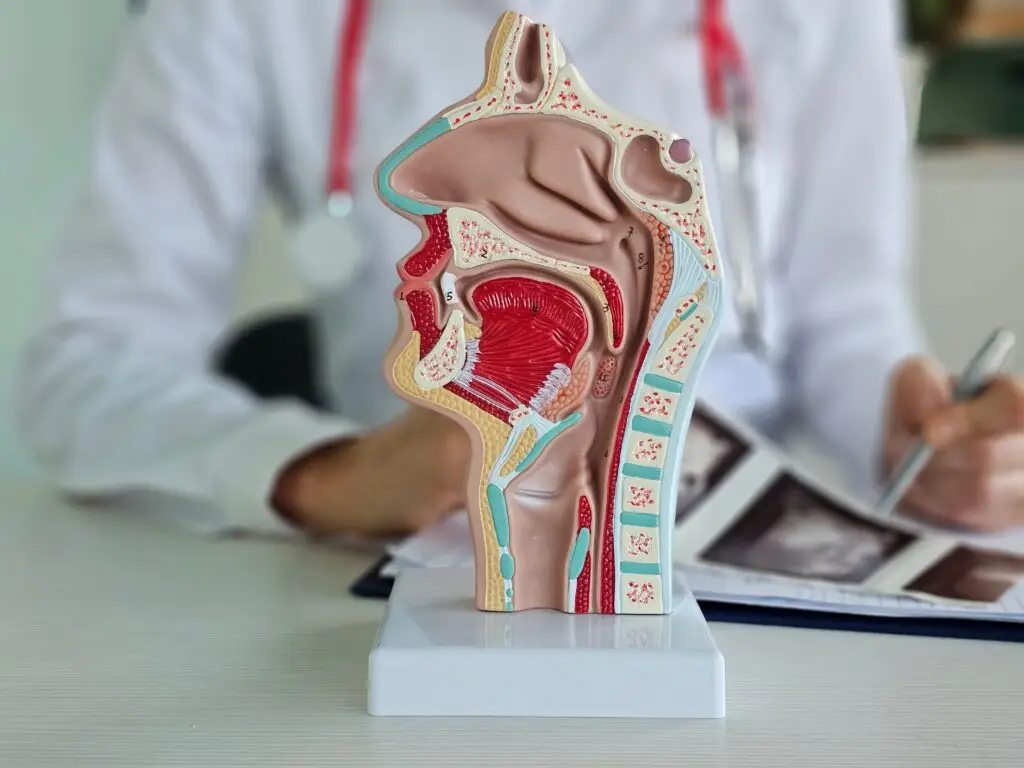
Adenoid and tonsil surgery is performed to treat breathing difficulties, snoring, recurrent tonsillitis, and ear problems caused by enlarged adenoids and tonsils, which are common in children and adults. This procedure, performed under general anesthesia, is a short and safe operation.
Ear tube insertion is used, especially in cases of recurrent ear infections or middle ear fluid buildup (serous otitis) causing hearing loss. A small tube is placed in the eardrum to ventilate the middle ear. It is a short procedure, usually performed under general anesthesia.
Septoplasty is a surgery to correct the curvature of the nasal septum, which is the dividing wall in the middle of the nasal cavity. Septal deviations that cause nasal obstruction, sleep apnea, snoring, and frequent sinus infections can be corrected with this procedure. It is performed under general or local anesthesia.
Myringoplasty is a surgical procedure to repair a perforated or damaged eardrum caused by trauma, infection, or chronic otitis media. This surgery can prevent hearing loss, reduce ear infections, and restore ear function.
Functional endoscopic sinus surgery (FESS) is a minimally invasive procedure used to treat chronic sinusitis, nasal polyposis, or sinus obstruction. It involves removing blockages within the sinuses using an endoscope to restore natural drainage. Performed under general anesthesia, the recovery period is typically short.
Vocal fold surgeries are performed to remove vocal fold nodules, polyps, cysts, or other lesions that cause complaints such as hoarseness, stridor, or changes in voice quality, using a microscope. This is done with a minimally invasive technique, preserving the vocal folds.
Septal perforation is a condition caused by a hole in the nasal septum (septal lining and cartilage). It can cause symptoms such as nasal congestion, nosebleeds, and crusting. Surgical repair closes the perforation and eliminates the symptoms.
Dacryocystorhinostomy (DCR) is used in the treatment of chronic tearing and dacryocystitis resulting from blockage of the tear duct. The symptoms are resolved by creating a new drainage opening from inside the nose using an endoscopic approach. It is a minimally invasive method that does not require an external incision.