
In my practice, among patients who come with persistent crusting inside the nose, frequent nosebleeds or a whistling sound when breathing, the cause in some is past or ongoing cocaine use. This is not an easy subject for most patients to talk about. My aim is not to judge, but to understand what is happening in the nose and to help the patient as well as I can.
In this article, as an Ear, Nose and Throat specialist, I summarise how cocaine damages the nose, which symptoms matter and what research supports in treatment.
1. How Does Cocaine Damage the Nose?
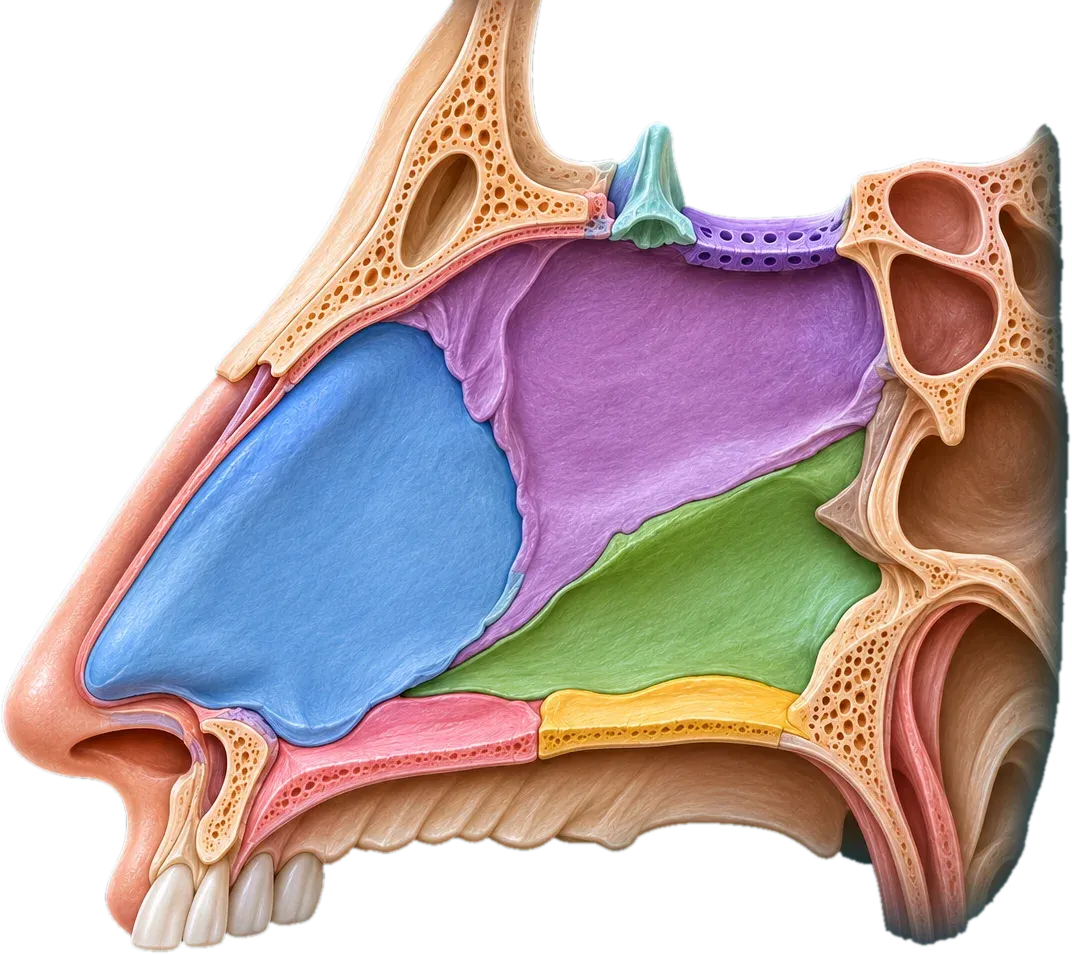
Cocaine strongly narrows the small blood vessels inside the nose. The nasal lining and the septal cartilage beneath it, deprived of blood, cannot get enough oxygen; with repeated use this tissue can gradually die and a hole in the septum (perforation) can form.
The process develops step by step:
- Narrowing of the vessels: Cocaine blocks the reuptake of adrenaline-like substances at nerve endings. The result is strong narrowing of the capillaries in the nasal lining.
- Tissue left without blood: When the vessels narrow, blood flow to the area falls; the lining becomes ischaemic, that is, starved of oxygen.
- The vulnerability of cartilage: Septal cartilage has no blood vessels of its own; it is nourished by the thin layer of tissue that covers it. When the circulation of this layer is disturbed, the cartilage is quickly affected and can die.
- Repeated injury: As use continues, the tissue is starved of blood again before it has a chance to heal, and the damage deepens.
In addition to the narrowing of the vessels, mechanical injury to the inside of the nose, the loss of function of the tiny hairs that clean the nose, and bacterial infections on top of this also speed up the destruction.
2. Why Doesn’t Everyone Who Uses Cocaine Develop a Hole?
Not everyone who uses cocaine develops a septal perforation. In a study that followed 104 regular cocaine users for two years, a perforation was found in about one in ten (10.5 percent); in roughly a quarter of these patients the damage extended beyond the cartilage into the bony part as well. Because many people with mild symptoms do not see a doctor, the true rate is thought to be higher. The fact that perforation does not occur in everyone suggests that factors other than vessel narrowing also play a role.
| Factor | What it does in the nose |
|---|---|
| Cocaine itself | Narrowing of the vessels and loss of blood supply; thinning of the lining, death of cartilage |
| Additives | Some can affect the immune system and increase tissue damage |
| Powder and cutting agents | Mechanical and chemical irritation of the lining; sores, crusting and nosebleeds |
| Secondary infections | When the nose loses its ability to clean itself, bacteria multiply; discharge, bone inflammation and tissue loss |
| Immune response | In some patients, the body’s response against its own tissue can contribute to the progression of the destruction |
3. Which Parts of the Nose Can the Damage Spread To?
The damage almost always starts in the middle wall of the nose (the septum). As use continues, in some patients it can gradually spread to the floor and side walls of the nose and to the sinuses.
In a systematic review of patients diagnosed with extensive cocaine-related nasal damage, the affected areas were found at the following rates:
| Area | Rate in these patients |
|---|---|
| Septum | 99 percent |
| Inferior turbinate and inner wall of the maxillary sinus | 59 percent |
| Palate (an opening between the mouth and the nose) | 30 percent |
| Middle turbinate and ethmoid sinuses | 23 percent |
| Wall of the eye socket and skull base | 8 percent |
These rates apply not to everyone who uses cocaine, but to patients diagnosed because of serious damage. Still, they show that the damage almost always begins in the septum and can progress as use continues.
When the nose loses the support of the septum, the nasal bridge can collapse; this is called a saddle nose. These changes can permanently affect both breathing and the appearance of the face. This is why early recognition and stopping use are so important.
4. What Nasal Symptoms Does Cocaine Cause? When Should You See an ENT Specialist?
The most common symptoms are a blocked nose, crusting inside the nose and repeated nosebleeds. Once a hole has formed in the septum, a whistling sound may be heard when breathing and the sense of smell may decrease. Because of cocaine’s numbing (local anaesthetic) effect, early damage may go unnoticed for a long time.
Complaints I often hear in the examination room:
- A persistently blocked nose and constant nasal discharge
- Thick, frequently recurring crusts inside the nose; sometimes a bad smell
- Easy and repeated nosebleeds
- A whistling sound from the nose when breathing in and out (may be a sign of a septal hole)
- A reduced sense of smell; as the septal hole grows, smell loss can increase
- Pain or tenderness inside the nose
When to seek examination without waiting
The following symptoms can mean the damage has spread beyond the septum. If you have any of them, see an ENT specialist without delay; for eye-related or neurological symptoms, go to the emergency department:
- Collapse or a change in the shape of the nasal bridge
- Liquid coming out of the nose when drinking, a nasal-sounding voice (may be a sign of an opening in the palate)
- Swelling around the eye, blurred vision or double vision
- Severe headache, high fever or a change in consciousness
Even without these symptoms, persistent crusting and bleeding inside the nose should be assessed at an ENT consultation. For other causes of a blocked nose, see the nasal congestion page; for problems caused by long-term use of nasal sprays, see nasal spray addiction.
5. What Can Be Done in Treatment?
Treatment is considered in three steps: nasal care and symptom control, a prosthesis (button or palatal plate) when needed, and surgical repair in suitable patients. Which one is appropriate depends on the size of the hole, the blood supply of the tissue and, most importantly, whether cocaine has been stopped.
Non-surgical treatment and prostheses
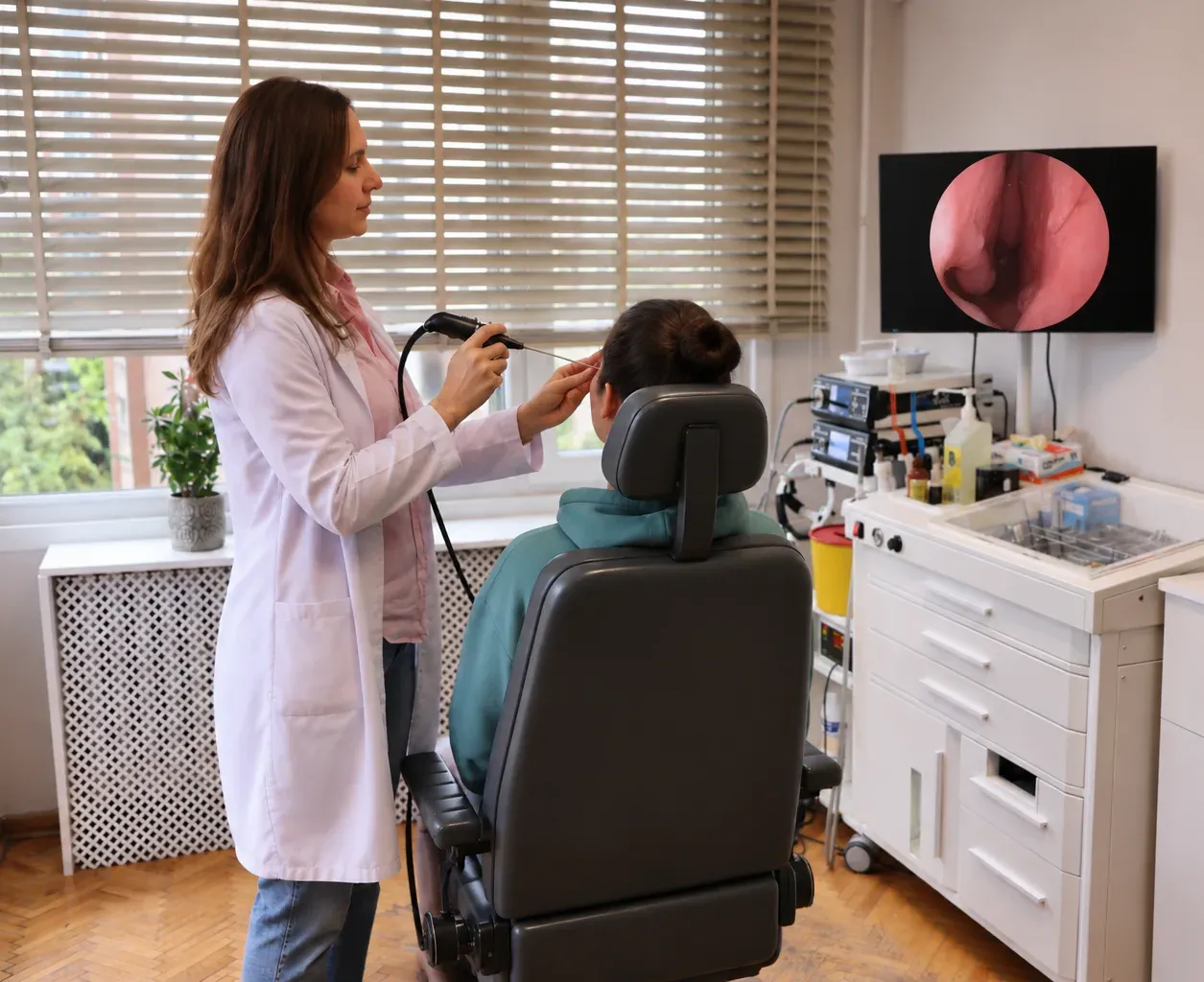
- Nasal care: Regular nasal rinsing, removal of crusts during examination and, when needed, treatment of infection based on culture results are the first step. These reduce crusting, bad smell and bleeding.
- Silicone septal button: A small prosthesis made of soft silicone that closes the hole in the septum. When use continues or surgery is not suitable, it can ease symptoms such as whistling, crusting and bleeding.
- Palatal prosthesis (obturator): If the damage has reached the palate and an opening has formed between the mouth and the nose, a palatal plate that closes this opening can improve swallowing and speech. It serves as a bridge until permanent repair.
Surgical repair
| Method | When is it considered? |
|---|---|
| Closure by moving tissue from inside the nose (flap) | Small and medium-sized septal holes |
| Interposition grafts | To reinforce the closed area; the patient’s own connective tissue or prepared tissue grafts can be used |
| Reconstruction with cartilage | When the nasal bridge has collapsed (saddle nose); rib cartilage is most often used |
| Tissue transfer from a distant area | Very large septal losses and damage that includes the palate; operations that require microsurgery and are performed at specialised centres |
| Camouflage with filler | Can temporarily improve the appearance in some saddle-nose cases unsuitable for surgery; it does not close the hole |
For general information on septal and nasal surgery, see the septoplasty and nasal surgery pages.
How long must you be cocaine-free before surgery?
The most important condition for repair surgery is that cocaine has been stopped completely and permanently. Published studies usually require at least 6 to 12 months without use before surgery, confirmed by urine testing; some repair series waited several years.
- For septal holes unrelated to cocaine, surgical closure success has been reported at 84 to 91 percent in studies.
- For cocaine-related holes, success may be lower because the circulation inside the nose is weakened. It is difficult to give a reliable success rate for this group.
- Cases have been reported in which the tissue failed to heal and perforated again, even after nasal operations performed years after cocaine was stopped.
For this reason, the decision on surgery and its timing is made individually, after assessing the condition of the tissue at examination. No method guarantees success; but repair carried out at the right time and with the right method can clearly improve breathing and quality of life in many patients.
6. Does the Nose Heal After Stopping Cocaine?
Partly. Stopping cocaine is the most important, and the only lasting, way to halt the progression of the damage. With nasal care, symptoms such as crusting, bleeding and infection usually improve. However, tissue that has been lost does not grow back on its own.
- What can recover: Inflammation of the lining, crusting and bleeding usually ease once use stops and regular care is carried out.
- What may be permanent: A hole in the septal cartilage does not close on its own. A collapsed nasal bridge and an opening in the palate do not correct themselves either. Loss of smell may be partly permanent if the septal hole is large.
- The mark on the vessels: Healing problems have been reported even in nasal operations performed years after cocaine was stopped. This is why it is important to tell your doctor about past use when nasal surgery is being planned.
7. I Am Hesitant to Tell My Doctor: What Can You Expect at the Examination?
This hesitation is very common and understandable. But sharing cocaine use with your doctor is the first step towards the right diagnosis and the right treatment. The purpose of the examination is not to judge you, but to understand what is happening in your nose and to help you.
Research shows that people who use substances often see a doctor late or do not mention their use because they fear being judged. In a study of 119 people treated for substance use disorder in Germany, about half of the participants said they had hidden their use because they were wary of healthcare workers, and a third said they had avoided medical care they needed. A study in rhinology clinics also found that not disclosing cocaine use delayed diagnosis.
What happens when use is not known?
- The damage in the nose can resemble other nasal diseases; if the doctor does not know about the use, reaching the right diagnosis may be delayed.
- Nasal surgery performed while use continues may fail and increase the damage.
What kind of approach should you expect at the examination?
| Topic | My approach |
|---|---|
| Communication | I ask my questions openly, respectfully and without judgement. My aim is to make the right diagnosis. |
| Privacy | What we discuss at the examination stays between us, in line with the principles of patient confidentiality. |
| Diagnosis | Blood tests and, if needed, imaging and a tissue sample (biopsy) may be requested to clarify the cause of the damage. |
| Teamwork | When needed, I work together with psychiatry and addiction services. |
Where can you get support to stop?
Addiction is not a weakness of will but a treatable health problem. Although there is no approved medicine for cocaine addiction, there are psychosocial treatments that research has shown to be effective:
- Brief motivational conversations: Even a short, non-judgemental conversation during a medical visit has been shown to help reduce cocaine use.
- Reward-based behavioural treatments and community-support approaches: These programmes, delivered at specialised centres, are among the methods with the strongest evidence for stopping cocaine and staying in treatment.
- Specialist support: In Turkey, you can apply to the AMATEM (Alcohol and Substance Addiction Treatment Centre) units at state hospitals or call the ALO 191 advice line. If you live in another country, your family doctor or local addiction services can direct you to the right service.
The treatment of your nose and the process of stopping go hand in hand: stopping use halts the progression of the damage and, if needed, makes repair surgery possible.
Conclusion: What Should You Do?
Cocaine can cause damage inside the nose that often progresses silently. If you have noticed persistent crusting, bleeding, a whistling sound or a change in the shape of your nose, talking about it openly with an ENT specialist is the first and most important step. Stopping use is necessary both to halt the damage and, if needed, for repair; you do not have to face this alone. An ENT consultation is recommended to assess the condition of your nose.
For an assessment tailored to you, always consult an ENT specialist.
References
M. F. Armstrong, A. Shikani. “Nasal Septal Necrosis Mimicking Wegener’s Granulomatosis in a Cocaine Abuser.” ENT Journal, 75 (1996): 623-626. https://doi.org/10.1177/014556139607500913.
M. Trimarchi et al. “Cocaine-induced midline destructive lesions: clinical, radiographic, histopathologic, and serologic features and their differentiation from Wegener granulomatosis.” Medicine, 80 6 (2001): 391-404. https://doi.org/10.1097/00005792-200111000-00005.
R. Patel et al. “Nasal toxicity of cocaine: a hypercoagulable effect?” Journal of the National Medical Association, 92 1 (2000): 39-41.
M. Trimarchi, M. Bussi, R. Sinico, P. Meroni, U. Specks. “Cocaine-induced midline destructive lesions — an autoimmune disease?” Autoimmunity Reviews, 12 4 (2013): 496-500. https://doi.org/10.1016/j.autrev.2012.08.009.
M. Berman, D. Paran, O. Elkayam. “Cocaine-Induced Vasculitis.” Rambam Maimonides Medical Journal, 7 (2016). https://doi.org/10.5041/rmmj.10263.
N. Kumar. “Cocaine induced midline destructive lesions.” (2018). https://doi.org/10.15761/ohns.1000187.
D. García-Pérez et al. “Snorting the Brain Away: Cerebral Damage as an Extension of Cocaine-Induced Midline Destructive Lesions.” Journal of Neuropathology and Experimental Neurology (2020). https://doi.org/10.1093/jnen/nlaa097.
E. Doumanian, S. Mallya. “Cocaine-Induced Midline Destructive Lesions: Two Case Reports.” Oral Surgery, Oral Medicine, Oral Pathology, and Oral Radiology, 132 (2021). https://doi.org/10.1016/j.oooo.2021.04.035.
L. Nitro et al. “Distribution of cocaine-induced midline destructive lesions: systematic review and classification.” European Archives of Oto-Rhino-Laryngology, 279 (2022): 3257-3267. https://doi.org/10.1007/s00405-022-07290-1.
C. Gill et al. “Cocaine-induced granulomatosis with polyangiitis — an under-recognized condition.” Rheumatology Advances in Practice, 7 (2023). https://doi.org/10.1093/rap/rkad027.
A. Hadad, G. Hadad, L. Bassagaisteguy. “Destructive midline facial lesions secondary to cocaine use in the otolaryngology office (Rosario, Argentina).” SCT Proceedings in Interdisciplinary Insights and Innovations (2023). https://doi.org/10.56294/piii2023159.
J. Jeffers, S. S. Akella, A. Q. Tran, P. Setabutr. “Cocaine Orbitopathy Complicated by Orbital Wall Defects, Bilateral Naso-Orbital Fistulas, Phthisis, and Bilateral Vision Loss.” Ophthalmic Plastic and Reconstructive Surgery (2023). https://doi.org/10.1097/iop.0000000000002372.
A. Berbéri, E. Azar. “Oral Rehabilitation for a Patient with Cocaine-Induced Midline Destructive Lesions.” Case Reports in Otolaryngology (2024). https://doi.org/10.1155/2024/7109261.
“Hard Palate Perforation and Prosthetic Rehabilitation in Cocaine Abuser: A Case Report.” Annals of Case Reports (2025). https://doi.org/10.29011/2574-7754.102263.
R. A. Algazlan, T. Soares, T. Ross, C. Rennie. “Is routine cocaine testing justified in patients with septal perforation?” Rhinology (2025). https://doi.org/10.4193/rhin25.055.
S. Mobley, J. Boyd, F. C. Astor. “Repair of a Large Septal Perforation with a Radial Forearm Free Flap: Brief Report of a Case.” ENT Journal, 80 (2001): 512. https://doi.org/10.1177/014556130108000810.
B. Guyuron, P. Afrooz. “Correction of Cocaine-Related Nasal Defects.” Plastic and Reconstructive Surgery, 121 (2008): 1015-1023. https://doi.org/10.1097/01.prs.0000299464.02430.78.
L. Døsen, R. Haye. “Endonasal Surgery after Cocaine Abuse: Safe at Any Interval?” Case Reports in Otolaryngology (2012). https://doi.org/10.1155/2012/823470.
M. Trimarchi, V. Sykopetrites, M. Bussi. “Management of a cocaine-induced palatal perforation with a nasal septal button.” Ear, Nose & Throat Journal, 95 1 (2016): E36-38. https://doi.org/10.1177/014556131609500108.
C. Pereira et al. “Nasoseptal Perforation: from Etiology to Treatment.” Current Allergy and Asthma Reports, 18 (2018): 1-12. https://doi.org/10.1007/s11882-018-0754-1.
D. Conrad, H. Zhang, D. Côté. “Acellular Human Dermal Allograft as a Graft for Nasal Septal Perforation Reconstruction.” Plastic and Reconstructive Surgery, 141 (2018): 1517-1524. https://doi.org/10.1097/prs.0000000000004410.
E. Sapmaz, Y. Toplu, B. T. Somuk. “A new classification for septal perforation and effects of treatment methods on quality of life.” Brazilian Journal of Otorhinolaryngology, 85 (2019): 716-723. https://doi.org/10.1016/j.bjorl.2018.06.003.
W.-T. Wang et al. “Septal Perforation Repair Using Bilateral Rotational Flaps With Interposed Mastoid Periosteal Graft.” The Laryngoscope, 131 (2021). https://doi.org/10.1002/lary.29347.
J. Barrientos, G. Corchero, F. Soler. “Surgical treatment of cocaine-induced palatal perforations: Report of three cases and literature review.” Journal of Clinical and Experimental Dentistry, 13 (2021): e201-e206. https://doi.org/10.4317/jced.57730.
S. Kuzu, Ç. Günebakan. “Nasal Septal Perforation: Experience of Management.” Bengal Journal of Otolaryngology and Head Neck Surgery (2021). https://doi.org/10.47210/bjohns.2020.v28i3.296.
J. M. Fermin et al. “Surgical repair of nasal septal perforations: A systematic review and meta-analysis.” International Forum of Allergy & Rhinology, 12 (2022): 1104-1119. https://doi.org/10.1002/alr.22965.
M. H. Cheung et al. “Surgical repair of large nasal septal perforation: a systematic review and meta-analysis.” European Archives of Oto-Rhino-Laryngology (2025). https://doi.org/10.1007/s00405-025-09913-9.
E. Lupi et al. “Surgical Management of Oro-Nasal Communication in Cocaine-Induced Lesions: Temporalis Muscle Flap with Le Fort I Osteotomy.” Journal of Clinical Medicine, 14 (2025). https://doi.org/10.3390/jcm14062033.
B. Rotenberg et al. “How I Do It: The Role of Nasal Filler in Managing Cocaine-Induced Saddle Nose Deformity.” The American Journal of Cosmetic Surgery, 43 (2025): 298-302. https://doi.org/10.1177/07488068251397587.
M. Vergara, J. Cordero-Escalona, V. Veloso-Casado. “Cocaine-induced oronasal communication of the midline of the palate: A case report.” Medwave, 25 1 (2025): e3012. https://doi.org/10.5867/medwave.2025.01.3012.
R. L. Walton, N. Gherlone, J. Bai. “Microsurgical Repair of Large Nasal Septal Defects.” Annals of Plastic Surgery, 94 (2025): 320-324. https://doi.org/10.1097/sap.0000000000004218.
S. Higgins et al. “A behavioral approach to achieving initial cocaine abstinence.” The American Journal of Psychiatry, 148 9 (1991): 1218-1224. https://doi.org/10.1176/ajp.148.9.1218.
J. A. Bernstein et al. “Brief motivational intervention at a clinic visit reduces cocaine and heroin use.” Drug and Alcohol Dependence, 77 1 (2005): 49-59. https://doi.org/10.1016/j.drugalcdep.2004.07.006.
J. Livingston, T. Milne, M.-L. Fang, E. Amari. “The effectiveness of interventions for reducing stigma related to substance use disorders: a systematic review.” Addiction, 107 (2012): 39-50. https://doi.org/10.1111/j.1360-0443.2011.03601.x.
F. De Crescenzo et al. “Comparative efficacy and acceptability of psychosocial interventions for individuals with cocaine and amphetamine addiction: A systematic review and network meta-analysis.” PLoS Medicine, 15 (2018). https://doi.org/10.1371/journal.pmed.1002715.
L. Caulley, A. Takhar, F. Bast, P. Surda, C. Hopkins. “Non-disclosure of cocaine use in the rhinology practice: A retrospective study of 27 patients.” Clinical Otolaryngology, 45 (2020). https://doi.org/10.1111/coa.13535.
V. Earnshaw. “Stigma and substance use disorders: A clinical, research, and advocacy agenda.” The American Psychologist, 75 (2020): 1300-1311. https://doi.org/10.1037/amp0000744.
E. Schwartz et al. “Cocaine Use Disorder (CUD): Current Clinical Perspectives.” Substance Abuse and Rehabilitation, 13 (2022): 25-46. https://doi.org/10.2147/sar.s337338.
A. Sibley, D. Colston, V. F. Go. “Interventions to Reduce Self-Stigma in People Who Use Drugs: A Systematic Review.” Journal of Substance Use and Addiction Treatment, 159 (2024): 209284. https://doi.org/10.1016/j.josat.2023.209284.
E. Magnan et al. “Stigma Against Patients With Substance Use Disorders Among Health Care Professionals and Trainees and Stigma-Reducing Interventions: A Systematic Review.” Academic Medicine, 99 (2024): 221-231. https://doi.org/10.1097/acm.0000000000005467.
S. Maahs et al. “Patient perspectives on current and potential therapies and clinical trial approaches for cocaine use disorder.” Frontiers in Psychiatry, 15 (2024). https://doi.org/10.3389/fpsyt.2024.1230699.
S. Minozzi, R. Saulle, L. Amato, F. Traccis, R. Agabio. “Psychosocial interventions for stimulant use disorder.” Cochrane Database of Systematic Reviews, 2 (2024): CD011866. https://doi.org/10.1002/14651858.cd011866.pub3.
C. Pinzón-Gómez, J. P. Langlade, C. Gantiva. “Systematic review of cognitive and behavioral strategies used in effective harm reduction interventions for people who use cocaine.” Journal of Addictive Diseases, 43 (2024): 107-120. https://doi.org/10.1080/10550887.2024.2327762.
M. Luderer et al. “Stigma from healthcare professionals and care-limiting behaviors in individuals with substance use disorders: a mixed-methods study.” The Lancet Regional Health – Europe, 63 (2026). https://doi.org/10.1016/j.lanepe.2025.101587.
C. Cioffi et al. “A Scoping Review of Implementation Strategies to Reduce Stigma toward People who Use Substances in Healthcare Settings.” Journal of Substance Use and Addiction Treatment (2026). https://doi.org/10.1016/j.josat.2026.210005.
M. Trimarchi et al. “Sinonasal Osteocartilaginous Necrosis in Cocaine Abusers: Experience in 25 Patients.” American Journal of Rhinology, 17 (2003): 33-43. https://doi.org/10.1177/194589240301700107.
L. Di Rienzo Businco et al. “Psychological aspects and treatment of patients with nasal septal perforation due to cocaine inhalation.” Acta Otorhinolaryngologica Italica, 28 5 (2008): 247-251.
M. Trimarchi, G. Bertazzoni, M. Bussi. “Cocaine induced midline destructive lesions.” Rhinology, 52 2 (2014): 104-111. https://doi.org/10.4193/rhin13.112.
M. Di Cosola et al. “Cocaine-Induced Midline Destructive Lesions (CIMDL): A Real Challenge in Diagnosis.” International Journal of Environmental Research and Public Health, 18 (2021). https://doi.org/10.3390/ijerph18157831.
M. Morsy, M. Stavrakas. “Cocaine Abuse (Cocaine-Induced Midline Destructive Lesions — CIMDL).” Rhinology and Anterior Skull Base Surgery (2021). https://doi.org/10.1007/978-3-030-66865-5_65.
B. A. Edo et al. “When recreation turns risky: the multifaceted negative impact of cocaine-induced nasal septal perforations.” European Archives of Oto-Rhino-Laryngology (2025). https://doi.org/10.1007/s00405-025-09883-y.
B. A. Edo et al. “Negative impact of nasal septal perforation on quality of life: insights from 153 patients in a Spanish study.” Acta Otorrinolaringológica Española (2026). https://doi.org/10.1016/j.otoeng.2026.512370.
K. Yuen-Ato et al. “Nasal septal perforation has a negative impact on olfactory and trigeminal function.” Rhinology (2026). https://doi.org/10.4193/rhin25.285.