
One of the complaints I hear most often in ENT practice is: “There is a constant sound in my ear. No one else hears it, but I can’t make it stop.” This sound is called tinnitus. Some patients describe it as whistling, others as humming, hissing or a sound that beats like a pulse.
In this article, as an ENT specialist, I summarise the causes of tinnitus, when you should see a doctor without waiting and what research supports in treatment.

1. What Causes Tinnitus?
The three most common causes of tinnitus are hearing loss, exposure to loud noise and certain medicines that can damage the inner ear. Usually there is some damage in the inner ear, and the brain’s hearing centres produce this “phantom” sound while trying to compensate for the missing input.
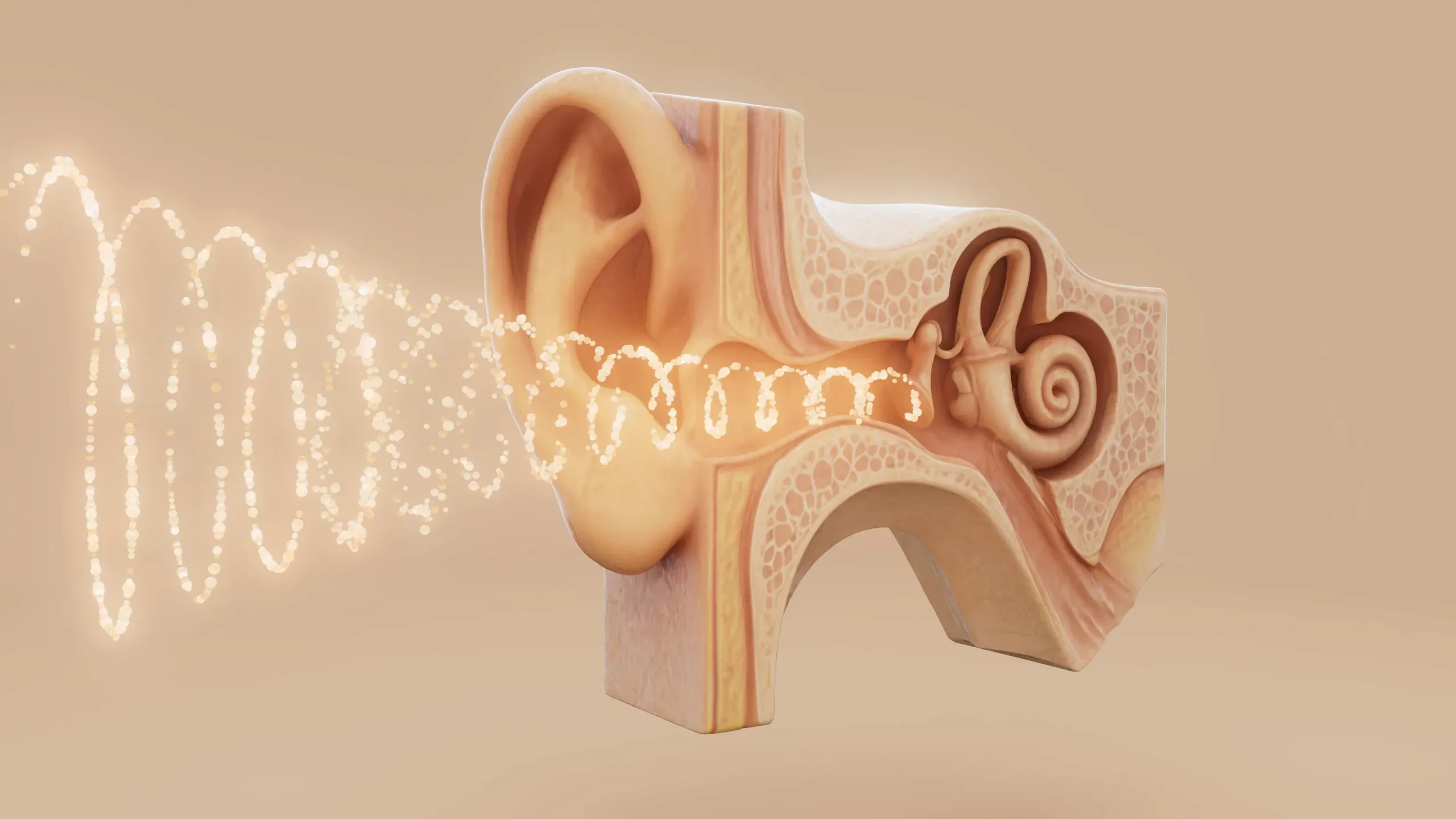
- Hearing loss: Most people with tinnitus have a sensorineural hearing loss, often unnoticed. Age-related hearing loss (presbycusis) is the most common example.
- Noise: Noise at work, loud music, concerts or headphone use can damage the hair cells of the inner ear. A single very loud sound (an explosion, a gunshot) can also trigger tinnitus. Loud music is becoming an increasingly important cause in young people.
- Medicines: High-dose aspirin, some antibiotics, some diuretics and some chemotherapy drugs can affect the inner ear. Aspirin-related ringing usually stops when the medicine is discontinued. If you suspect a medicine you are taking, do not stop it on your own; talk to your doctor.
- Outer and middle ear problems: Earwax blockage, middle ear infection and fluid in the middle ear can disrupt sound conduction and cause ringing. In this group, treating the cause often resolves the tinnitus as well.
2. Can Sinusitis and Nasal Congestion Cause Tinnitus?
They can. The nose and the middle ear are connected by a narrow channel called the Eustachian tube. When swelling from sinusitis or allergy narrows its opening, the middle ear cannot ventilate; ear fullness, reduced hearing and ringing may follow.
As a surgeon who works on the nose, I see this connection often in my practice:
- Eustachian tube dysfunction is reported quite frequently in patients with chronic sinusitis. As sinus disease becomes more severe, measurements showing disturbed middle ear pressure also become more common.
- Allergic rhinitis and colds can contribute to ear symptoms in the same way.
- Studies have shown that endoscopic sinus surgery, performed for chronic sinusitis that does not respond to medication, significantly reduces Eustachian tube symptoms, and that tinnitus also improves in some patients.
This is why, when a patient comes with tinnitus, I examine the nose and sinuses as well as the ear. If there is persistent fluid in the middle ear, options such as ear tubes may be considered. For other causes of nasal congestion, see cold or chronic sinusitis?
3. Why Does Tinnitus That Beats With the Heart (Pulsatile Tinnitus) Matter?
A sound heard in rhythm with the pulse, a “thump-thump” or “whoosh-whoosh”, is called pulsatile tinnitus. It makes up about 4 to 10 percent of tinnitus cases and, unlike other types, usually has an identifiable cause related to the blood vessels. That is why it should always be evaluated.
In studies, a specific cause could be found in more than 70 percent of patients with pulsatile tinnitus. The most common causes are:
| Group of causes | Examples |
|---|---|
| Vein problems | Narrowing or structural variations of the veins in the brain |
| Artery problems | Narrowing of the carotid artery, a tear in the artery wall (dissection), aneurysm |
| Abnormal vessel connections | An abnormal connection between an artery and a vein (fistula, AVM) |
| Raised pressure inside the skull | Idiopathic intracranial hypertension, which may come with headache and visual disturbance |
| Ear-related causes | A vascular tumour in the middle ear (glomus), thinning of the inner ear bone |
When to see a doctor immediately
Pulsatile tinnitus can, although rarely, be the first sign of conditions that carry a risk of stroke or brain haemorrhage. If any of the following is present, seek care without waiting, at an emergency department if needed:
- Sudden, severe headache or neck pain together with the ringing
- Blurred vision, double vision or loss of vision
- Difficulty speaking, weakness or numbness in the face, arm or leg, loss of balance
- Ringing that started within the last few days and is getting worse
Even without these symptoms, pulsatile tinnitus should be evaluated by an ENT specialist, with vascular imaging and further work-up together with neurology when needed.
4. When Should I See an ENT Specialist?
Ringing that lasts a few seconds and goes away on its own is usually harmless. However, an examination is recommended if the ringing lasts longer than a week, is in one ear only, or comes with any of the following:
- Ringing in one ear or reduced hearing in one ear
- Sudden hearing loss (this is an emergency; starting treatment in the first days matters)
- Dizziness or imbalance (about vertigo)
- Ear pain, discharge or fullness
- Ringing that beats with the pulse
- Ringing distressing enough to disturb sleep, work or mood
During an ENT consultation the ear, nose and Eustachian tube are assessed, with a hearing test and tympanometry when needed. Imaging is requested in rare cases.
5. Is There a Medicine for Tinnitus?
The honest answer: there is no medicine proven and approved to eliminate persistent tinnitus. This does not mean nothing can be done; non-drug approaches have stronger evidence.
- Many options have been tried, including vasodilators, vertigo medicines, some nerve medicines, herbal supplements, vitamins and minerals. Analyses pooling these studies found them no more effective than placebo at relieving tinnitus.
- International guidelines recommend medication not for the tinnitus itself, but for accompanying problems such as insomnia, anxiety or depression, under a doctor’s supervision.
- Tinnitus that starts together with sudden hearing loss is a separate situation; the treatment decision is made urgently and after an examination.
I recommend being cautious about products and supplements that promise to “definitely cure” tinnitus.
6. What Helps Persistent (Chronic) Tinnitus?
Tinnitus lasting longer than three months is called chronic tinnitus. In chronic tinnitus the goal is less about erasing the sound completely and more about reducing its impact on your life. Research and guidelines are fairly clear on this:
| Method | What does the evidence say? |
|---|---|
| Cognitive behavioural therapy (CBT) | The method with the strongest evidence. It does not change the loudness of the sound, but it significantly improves the reaction to it, the distress and quality of life. It is the only psychotherapy the guidelines jointly recommend; internet-based programmes have also been shown to help. |
| Hearing aid | Recommended when tinnitus comes with hearing loss. A multicentre study of 461 patients showed that hearing aids markedly reduced the distress caused by tinnitus. In severe hearing loss, a cochlear implant may help. |
| Sound therapy | Using soft background sound (white noise, nature sounds), or tinnitus retraining therapy (TRT) combined with counselling, aims to help the brain get used to the sound and brings relief to some people. However, because of methodological problems in the studies, evidence for it on its own is limited. |
| Medication | Not recommended for the tinnitus itself; may be used for accompanying psychological and sleep problems. |
A few simple steps help in daily life too: playing soft background sound in quiet rooms, using ear protection in noisy places and turning your attention to other activities instead of trying to control the ringing. When tinnitus seriously affects sleep or mood, working with a psychologist or psychiatrist is an important part of treatment.
7. What Does the Evidence Say About TMS, Laser and Acupuncture?
Patients often ask me about these methods. The short answer: there is limited and variable evidence for rTMS, and no strong evidence for laser or acupuncture. None of them is among the first-line treatments in the guidelines.
- rTMS (repetitive transcranial magnetic stimulation): Magnetic stimulation is applied from outside to the hearing area of the brain. Some studies have shown improvement lasting from a few weeks to a few months; in one study, for example, the response rate was 56 percent with rTMS and 22 percent with a sham procedure. However, other analyses found no significant difference. The method is generally considered safe, but it cannot be predicted in advance who will benefit.
- Low-level laser: Although some studies of laser applied to the ear report positive results, many studies found the effect no different from placebo.
- Acupuncture: Results in controlled studies are inconsistent; a reduction in tinnitus has been shown in only a small number of studies.
If you are considering one of these methods, I recommend first having the cause of your tinnitus investigated and trying the methods with stronger evidence.
Conclusion: What Should You Do?
Tinnitus is usually not the sign of a dangerous disease, but it should not be ignored. Ringing that is in one ear, beats with the pulse, or comes with sudden hearing loss or dizziness should be evaluated without delay. In chronic tinnitus, although there is no medicine that silences the sound completely, the right approaches can make its place in your life considerably smaller. An ENT consultation is recommended to find the cause of your tinnitus and the approach that suits you.
For an assessment tailored to you, be sure to consult an ENT specialist.
References
N. N. Biswas et al. “Causes and Mechanisms of Tinnitus: A Systematic Review.” Faridpur Medical College Journal, 20 1 (2025). https://doi.org/10.3329/fmcj.v20i1.80716.
S. Shore, L. Roberts, B. Langguth. “Maladaptive plasticity in tinnitus — triggers, mechanisms and treatment.” Nature Reviews Neurology, 12 (2016): 150-160. https://doi.org/10.1038/nrneurol.2016.12.
R. Clifford, A. Ryan. “The Interrelationship of Tinnitus and Hearing Loss Secondary to Age, Noise Exposure, and Traumatic Brain Injury.” Ear and Hearing, 43 (2022): 1114-1124. https://doi.org/10.1097/aud.0000000000001222.
M. Pienkowski. “Loud Music and Leisure Noise Is a Common Cause of Chronic Hearing Loss, Tinnitus and Hyperacusis.” International Journal of Environmental Research and Public Health, 18 (2021). https://doi.org/10.3390/ijerph18084236.
B. Mazurek et al. “Clinical Practice Guideline: Chronic Tinnitus — Diagnosis and Treatment.” Deutsches Ärzteblatt International (2022). https://doi.org/10.3238/arztebl.m2022.0135.
S. Meijers et al. “Analysis and comparison of clinical practice guidelines regarding treatment recommendations for chronic tinnitus in adults: a systematic review.” BMJ Open, 13 (2023). https://doi.org/10.1136/bmjopen-2023-072754.
T. Kleinjung, N. Peter, M. Schecklmann, B. Langguth. “The Current State of Tinnitus Diagnosis and Treatment: a Multidisciplinary Expert Perspective.” JARO, 25 (2024): 413-425. https://doi.org/10.1007/s10162-024-00960-3.
S. Schoisswohl et al. “Single versus combination treatment in tinnitus: an international, multicentre, parallel-arm, superiority, randomised controlled trial.” Nature Communications, 16 (2025). https://doi.org/10.1038/s41467-025-66165-1.
J. Henry, K. Carlson, S. M. Theodoroff, R. Folmer. “Reevaluating the Use of Sound Therapy for Tinnitus Management: Perspectives on Relevant Systematic Reviews.” Journal of Speech, Language, and Hearing Research (2022). https://doi.org/10.1044/2022_jslhr-21-00668.
Z. Liang et al. “Repetitive transcranial magnetic stimulation on chronic tinnitus: a systematic review and meta-analysis.” BMC Psychiatry, 20 (2020). https://doi.org/10.1186/s12888-020-02947-9.
R. Folmer et al. “Repetitive Transcranial Magnetic Stimulation Treatment for Chronic Tinnitus: A Randomized Clinical Trial.” JAMA Otolaryngology–Head & Neck Surgery, 141 8 (2015): 716-722. https://doi.org/10.1001/jamaoto.2015.1219.
C. Dong et al. “Low-Frequency Repetitive Transcranial Magnetic Stimulation for the Treatment of Chronic Tinnitus: A Systematic Review and Meta-Analysis of Randomized Controlled Trials.” BioMed Research International (2020). https://doi.org/10.1155/2020/3141278.
M. Thabit et al. “Combined Central and Peripheral Stimulation for Treatment of Chronic Tinnitus.” Neurorehabilitation and Neural Repair, 29 (2015): 224-233. https://doi.org/10.1177/1545968314542616.
K. Narsinh et al. “Diagnostic Approach to Pulsatile Tinnitus: A Narrative Review.” JAMA Otolaryngology–Head & Neck Surgery (2022). https://doi.org/10.1001/jamaoto.2021.4470.
S. Pacheco-López et al. “Pulsatile Tinnitus: A Comprehensive Clinical Approach to Diagnosis and Management.” Journal of Clinical Medicine, 14 (2025). https://doi.org/10.3390/jcm14134428.
E. Raz et al. “Emergence of Venous Stenosis as the Dominant Cause of Pulsatile Tinnitus.” Stroke: Vascular and Interventional Neurology, 2 (2022). https://doi.org/10.1161/svin.121.000154.
M. Lee, J. T. Lee. “Impact of Sinonasal Disease on Eustachian Tube Dysfunction.” Current Treatment Options in Allergy, 10 (2023): 1-14. https://doi.org/10.1007/s40521-023-00327-8.
K.-S. Yang et al. “Endoscopic Sinus Surgery Significantly Reduces Eustachian Tube Dysfunction Symptoms in Patients with Chronic Rhinosinusitis: A Systematic Review and Meta-Analysis.” Biomedicines, 12 (2024). https://doi.org/10.3390/biomedicines12112484.
C. Virgen, T. Sawaf, B. Renslo, A. G. Chiu. “Does Surgery for Nasal Obstruction Improve Eustachian Tube Dysfunction?” The Laryngoscope, 133 (2022). https://doi.org/10.1002/lary.30488.